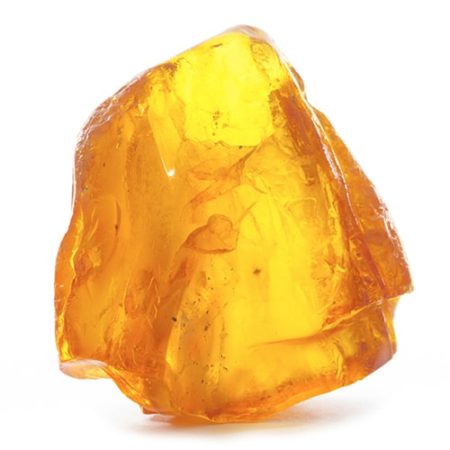
A small but big thought 💭: About 2,500 years ago, a Greek philosopher rubbed a piece of amber (hardened tree resin) against the wool of his garment and noticed that it attracted small bits of straw and feathers. This simple experiment sparked the phenomenon that powers your entire digital world today. Let’s see what that “spark” was 👇
From Amber to the Phone in Your Hand 📱
Those philosophers named this strange attraction after the amber itself — because amber in Greek is ēlektron. Yes, exactly the same word we now call “electron”! So every time you hear the word electron, you have a piece of ancient Greece on your tongue 😎.
But this isn’t just a nice historical tidbit. This phenomenon is all around you:
- When you take off your wool sweater, you hear a crackle and sometimes see a spark.
- You walk across the carpet, touch a metal doorknob — zap! You get a small shock.
- You rub a balloon on your hair, and it sticks to the wall.
They all share one root: electric charge. Even the message racing through the nerve cells in your brain right now as you read this sentence is an electrical signal. Pretty cool, right? 🤯
We have two types of charge: positive and negative ➕➖
In eighth grade, you learned that when two objects are rubbed together, they become charged and exert forces on each other. Experiments showed that there are only two types of charge. So who named them “positive” and “negative”? An American polymath named Benjamin Franklin.
The rule is also very straightforward:
- Like charges repel each other.
- Unlike charges attract each other.
Let’s take a look — this image displays cleanly on your mobile too 👇
One important point: if an object has a negative charge equal in magnitude to its positive charge, the net charge is zero, and we call the object neutral. This means being neutral does not mean having no charge; it means having equal amounts of positive and negative charge. 🎯
Try this balloon experiment yourself 🎈
This is the best part. Instead of just reading, move the charges around yourself and see why charged objects attract or repel each other.
How do we determine an object’s charge? The Electroscope 🔍
To identify the type of charge, we use a simple device called an electroscope. When you bring a charged object near it, the needle or metal leaves move, indicating the presence of charge.
Try this yourself — bring the charged rod close to the electroscope’s cap and see how the leaves spread apart 👇
How do we measure charge? The Coulomb 📏
The unit of electric charge in SI is the coulomb (symbol C) — named in honor of the French physicist Charles Coulomb.
Let me give you an intuitive sense of how large a coulomb is: one coulomb is very large! For example, in a lightning strike, a charge on the order of $10 text{C}$ is transferred to the ground. That’s why in everyday life we usually deal with much smaller orders of magnitude:
- microcoulomb ($1 mutext{C} = 10^{-6} text{C}$)
- nanocoulomb ($1 text{nC} = 10^{-9} text{C}$)
For instance, when you comb your hair with a plastic comb, the charge that moves is on the order of a nanocoulomb. That means the tiny spark you see happens with a charge this small. 😮
🤔 Question 1-1 (from the book): Why does plastic wrap (cling film) stay stuck to the edge of a food container when you press it down? (Hint: Think about the attraction between unlike charges — friction creates charge.)
Informal Summary 🎁
- Electric charge is the root of everything, from a clothes spark to your brain’s signals.
- We have two types of charge: positive and negative (Franklin’s naming convention).
- Like charges repel, unlike charges attract.
- An object with equal positive and negative charge is neutral.
- The unit of charge is the coulomb — but the coulomb is large, so we mostly use μC and nC.
Fun Fact Box 💡
Benjamin Franklin’s portrait is printed on the US $100 bill — he is the only person on US currency who was never President! His famous book on electricity was so important that some compare it to Newton’s “Principia Mathematica.” His kite experiment in a thunderstorm (which was also dangerous!) demonstrated that lightning is an electrical phenomenon. In other words, the same thing you learned from a balloon, Franklin discovered in the sky ⚡.
🔗 For the Curious — Deeper Study
If you found this chapter interesting and want to take it a step further, check out these reliable and free resources:
- HyperPhysics — Georgia State University (Level: Intermediate, English): An excellent conceptual reference that explains electric charge and force using diagrams. Perfect for those who want to understand the “why” behind the concepts more deeply → hyperphysics.phy-astr.gsu.edu
- PhET — University of Colorado Boulder (Level: Introductory, Interactive): The same simulation as above, with additional activities and experiments for personal exploration → phet.colorado.edu
📌 A recent update: Since 2019, scientists have redefined the unit of charge so that the elementary charge of the electron is a precise and fixed number: $e = 1.602176634 times 10^{-19} text{C}$. Your textbook cites the approximate value of $1.6 times 10^{-19} text{C}$, which is sufficient for solving problems — but now you know the precision behind it 😎.
Test Yourself 📝
Click on each question to reveal the answer 👇
In the next section (1-2), we’ll dive into a very important law: charge is neither created nor destroyed — it only moves around! See you there 👋
Have a question? 🤔
If something isn't clear or you have a question, ask it here. The answer will be published on this page.
💬 جواب بهتری داری؟ یا یه سؤال جدید؟
اگه به سؤالای بالا پاسخی داری که فکر میکنی روشنتر یا کاملتر از مال منه، یا یه سؤال جدید برای دانشآموزای دیگه داری — تو بخش نظرات پایین صفحه ارسال کن. هر پیامی رو میخونم، تأیید میکنم و منتشر میشه. اینجوری همه از تجربهی همدیگه استفاده میکنیم. 🌱